What Executive Coaching Actually Is
"Executive coaching" is a term that gets applied to a wide range of things. At one end: high-stakes leadership development for senior executives at major organizations. At the other: generic business advice repackaged with a premium price tag. Most of what's offered falls somewhere in between.
Let me describe what executive coaching is in the approach I practice — and what it is specifically designed to produce.
Executive coaching, done well, is a confidential, one-on-one process that helps senior leaders identify and address the internal patterns that are limiting their effectiveness. Not their skills. Not their knowledge. Their patterns of thought and behavior — the ones that produce their results and, more importantly, their ceiling.
“Most leaders get to the senior level by being excellent at something. The ceiling they hit there isn’t a skills gap. It’s a thinking gap — a pattern that worked at one level and becomes a constraint at the next.”
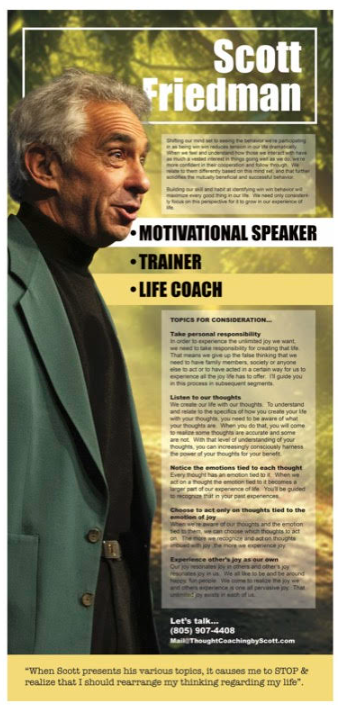
— Scott Friedman
Who Executive Coaching Is For
The candidates who get the most from executive coaching are typically:
- Senior leaders who have plateaued — who are performing at a high level but sense a ceiling they can't break through with more effort or more skill development
- Leaders in transition — stepping into a new role, a larger scope, or a different kind of organization, who need to lead differently than they have before
- High performers whose interpersonal patterns are creating friction — whose results are strong but whose leadership style is costing them in team dynamics, organizational trust, or executive presence
- Leaders who are performing well externally but burning out internally — who need to find a more sustainable way to operate
What Happens in an Executive Coaching Engagement
Here's what the process actually looks like in practice:
Discovery — understanding the actual terrain
The first sessions focus on genuine understanding. Not forms or assessments — though those have their place — but real conversation about who you are, how you lead, what's working, what isn't, and what you genuinely want from this work.
Pattern identification — surfacing what's not visible from the inside
A skilled coach reflects back what they're observing — patterns in how you describe situations, recurring themes, the gap between how you intend to show up and how you actually do. This is often where the most valuable work happens.
Thought-level work — addressing the root, not the symptoms
Behavioral change that lasts comes from genuine shifts at the level of thought and awareness — not from willpower or technique. This is the work that produces durable results rather than temporary improvements.
Integration — applying the work in real leadership situations
Coaching isn't just a thinking exercise. The insights have to translate into how you show up in boardrooms, performance conversations, strategy sessions, and one-on-ones. We work on the specific situations where the patterns are most costly.
What Executive Coaching Costs
Executive coaching rates vary enormously — from a few hundred dollars per session to several thousand, with many engagements structured as multi-month retainers ranging from $5,000 to $50,000+. The wide range reflects both the seniority of the coach's experience and, frankly, significant variation in what the market will bear.
My model is different from most. You pay nothing upfront. At the successful conclusion of our coaching engagement, you pay what you believe the work was genuinely worth — and what you can afford. This model puts the financial risk entirely on me — and it aligns my incentives completely with your outcomes.
For a senior leader, the relevant comparison isn't the cost of coaching versus zero. It's the cost of coaching versus the compounding cost of continuing with a pattern that's limiting your effectiveness, your team, and your organization.
What Results Are Realistic
Realistic results from effective executive coaching typically include:
- Clearer decision-making with less anxiety and second-guessing
- Improved ability to lead under pressure without reverting to reactive patterns
- Greater capacity to develop, challenge, and retain top performers
- A more sustainable operating mode — better results with less internal cost
- Sharper awareness of your own patterns and how they affect those around you
What's not realistic: transformation in a single session, wholesale personality change, or results without genuine willingness to examine your own thinking. Coaching is a collaborative process. The coach creates the conditions. The client does the actual work.
From a Ventura County Executive
“I’d been in executive roles for 20 years and thought I had a pretty clear picture of myself as a leader. Scott showed me the parts I couldn’t see — and he did it without judgment. That’s rare. The work we did changed how I lead and, honestly, how I live.”
— COO, Thousand Oaks, CA
Is Executive Coaching Right for You?
The most honest answer I can give you is: a 30-minute conversation will tell you more than this article can. The fit between a leader and a coach is personal — and the best way to assess it is to have a real conversation.
If you're a senior leader in Ventura County — Camarillo, Thousand Oaks, Ojai, Ventura, or surrounding areas — or if you're anywhere in the country and open to phone or video sessions, I'm available for a free discovery call with no agenda other than genuine fit assessment.
Book your free discovery call here, or call me directly at (805) 907-4408.
Scott Friedman is an executive coach and thought coaching practitioner with 40+ years of experience, serving senior leaders across Ventura County and nationwide. 13 published books. Pay nothing upfront.