The Truth About Leader Burnout That Nobody Talks About
A few years ago, I had a conversation with an executive — running a mid-sized company in Ventura County, doing well by most external measures — who told me she hadn't felt anything resembling genuine enthusiasm for her work in over two years.
She was functional. She was productive. She was hitting her numbers. And she was completely, utterly exhausted in a way that three vacations hadn't touched.
That's leader burnout. Not collapse. Not breakdown. Just the steady erosion of the thing that made the work worth doing in the first place.
“Most leaders don’t burn out from working too hard. They burn out from working in a way that’s fundamentally disconnected from who they are.”
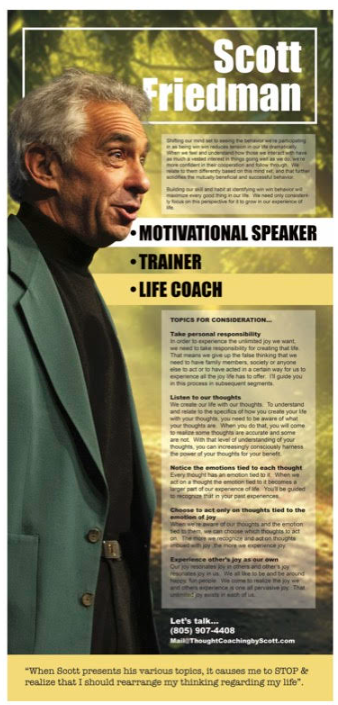
— Scott Friedman
What Leader Burnout Actually Is (and Isn’t)
The popular model of burnout goes like this: you work too many hours, deplete your reserves, and need rest to refill them. So the prescription is vacation, shorter hours, better work-life balance.
Sometimes that helps. Often it doesn’t. And when it doesn’t — when you come back from two weeks in Italy and feel just as flat as before — that’s a signal that the problem isn’t about volume. It’s about the quality of the relationship you have with your work and yourself.
Real leader burnout is almost always driven by one or more of these internal dynamics:
Leading from Fear Rather Than Purpose
When your primary driver is avoiding failure or looking inadequate — rather than genuinely caring about what you’re building — the work becomes exhausting at a fundamentally different level. Fear is not a sustainable fuel.
A Self Colonized by the Role
You stop being a person who leads and become a role that leads. The distinction sounds subtle. The experience of it is not.
Accumulated Emotional Suppression
Leaders who push through frustration, disappointment, and anxiety without acknowledging them carry an increasing weight that eventually becomes unbearable.
Loss of Meaning
The goals that once motivated feel hollow. Not because they’re wrong, but because the person who set them has changed — and the goals haven’t kept up.
What Burnout Looks Like in Leaders (Specifically)
Leader burnout rarely looks like collapse. More often, it looks like this:
- A steady loss of enthusiasm for work that used to genuinely energize you
- Growing cynicism — about your team, your organization, your ability to make a real difference
- Going through the motions: present physically, absent in every way that matters
- Irritability that seems out of proportion to the trigger
- The nagging sense that no matter how much you accomplish, it’s never enough
- Physical exhaustion that doesn’t resolve with rest
- A private suspicion that you’re failing, even when the numbers say otherwise
A Note Before We Continue
If several of these are familiar — you’re not alone. And you’re not broken. But you probably need something different than more vacation time.
5 Practices That Actually Reverse Leader Burnout
Practice 1
Notice When You’re Running on Fear
Underneath the exhaustion, there’s usually a fear-based thought running continuously. It sounds like this:
These thoughts feel like facts. They’re not. Learning to see them as thoughts — not truths — creates a gap between stimulus and response. That gap is where recovery begins.
Practice 2
Reclaim Something That Belongs Only to You
One hallmark of advanced burnout is that the self has been entirely consumed by the role. Reclaiming personal space is not indulgence — it’s maintenance of the person the role requires.
An early morning walk without your phone. A creative project with no audience. Cooking a meal for no reason other than the cooking. Something that reminds you that you are a person, not just a function.
Practice 3
Build a Daily Stillness Practice
I’ll be direct: some form of daily stillness is close to non-negotiable for leaders who want to sustain high performance over time.
The mind needs time to settle. It processes things in stillness that it can’t process in motion. Decisions from a settled mind are better. Emotional regulation is stronger. Presence in conversations is fuller. Ten minutes a day compounds profoundly over months and years.
Practice 4
Stop Treating Every Thought as an Emergency
Burned-out leaders typically have extremely anxious minds. Every email requires immediate response. Every problem requires immediate action. This mode of operating is profoundly exhausting — and it’s largely optional.
The practice is learning to pause before reacting. To ask: Is this actually urgent right now, or does it just feel urgent? Most things that feel like emergencies are not emergencies.
Practice 5
Work With Someone Who Can See What You Can’t
Burnout creates tunnel vision. You’re too deep inside the experience to see the patterns that created it and are sustaining it. This isn’t a character flaw — it’s just how consciousness works. We can’t see the frame we’re inside.
A skilled coach helps you surface the belief systems driving your burnout, question the thoughts sustaining it, and develop new internal habits. Most clients begin noticing meaningful shifts within four to six weeks — not because the external situation changes immediately, but because their relationship to it does.
“Burnout isn’t the price of caring about your work. It’s what happens when the way you’re caring stops being sustainable. That’s not permanent — not by caring less, but by learning to care from a different place.”
— Scott Friedman
A Final Note
If you’re a leader reading this and recognizing yourself — I want to say something clearly: what you’re experiencing is not weakness. Leadership at a high level is genuinely demanding. The leaders who acknowledge that and do the inner work to sustain themselves are the ones who lead well for decades, not just years.
If you’re ready to work on this, book a free discovery call. No cost, no obligation. We’ll talk about what’s actually driving the exhaustion — and what it would take to lead from a fundamentally different place. You can also learn more about Scott’s approach or explore his coaching services.