Exploring Life Coaching in Oxnard
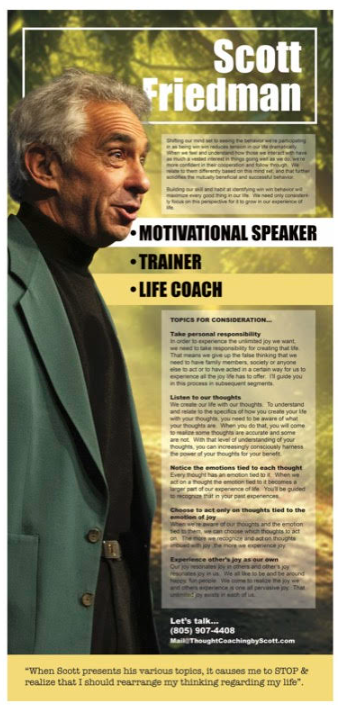
If you're considering life coaching in Oxnard, it may help to know what a first conversation involves and whether the approach is right for you. Scott Friedman offers thought coaching by phone or video. You can ask about his philosophy, practical expectations, and the free introductory call before making a decision.
And yet search for a "life coach in Oxnard" and you get: a Yelp list, a Psychology Today directory, and a couple of thin websites that appear to serve multiple cities simultaneously with the same copy.
There is virtually no practitioner-led, substantive coaching content written specifically for Oxnard. That gap matters — not just as an SEO observation, but as a real reflection of an underserved community.
This post is for Oxnard professionals who are ready to do serious work on what's actually holding them back.
Who Lives and Works in Oxnard — And Who Comes to Coaching
Oxnard's economy is more layered than most people outside the county realize:
- Agricultural and food industry professionals — The Oxnard Plain produces strawberries, celery, and other crops at a scale that makes it one of the most productive agricultural corridors in California. Farm operators, agricultural business owners, and food distribution executives deal with unique leadership pressures that standard coaching often misses entirely.
- Naval Base Ventura County — NBVC is one of the largest employers in the region. Active duty personnel, veterans transitioning to civilian careers, and defense contractor employees represent a significant portion of Oxnard's workforce — and a population with distinctive coaching needs around identity, purpose, and transition.
- Healthcare workers — St. John's Regional Medical Center and a dense network of clinics and practices serve Oxnard's large population. Healthcare professionals increasingly come to coaching not for career advice, but for help managing the emotional weight of their work and the leadership challenges of a changing healthcare environment.
- Entrepreneurs and small business owners — Oxnard has a growing small business community across construction, retail, food service, and professional services. Many of these owners are first-generation entrepreneurs navigating growth without a roadmap.
- Mid-career professionals — People who've been competent and hardworking for a decade and find themselves asking: is this it? Is this what I actually want?
The circumstances vary widely. The core coaching challenge — a gap between where someone is and where they sense they could be, with their own thought patterns standing in the middle — is remarkably consistent.
What Thought Coaching Is (And Why It Works Differently)
Most life coaching is goal-based: you identify what you want, the coach helps you build a plan and holds you accountable. This is fine. It works — up to a point. The point where it stops working is when the obstacle isn't a missing plan. It's a pattern of thought that quietly dismantles every plan you build.
Thought coaching starts one layer deeper. The foundation is a simple but powerful premise: a thought is a thought — not a fact. We experience our thoughts as reality, and we act accordingly. But the thought "I'm not the kind of person who succeeds at this" is not a fact. It's a thought. Treating it as a fact determines everything that follows.
The thought coaching process:
- Awareness — Identifying the specific thoughts that are generating the specific outcomes you don't want. Not in generalities — in the precise moment of a decision, a conversation, an avoided action.
- Acceptance — Accepting the thought as a thought, not fighting it or trying to replace it. Fighting a thought gives it more power. Accepting it as just a thought removes its authority.
- Automatic Improvement — When you consistently see thoughts clearly and accept them as thoughts rather than truths, behavior changes without effort. The pattern loses its grip.
This is the methodology I've developed through 40+ years of daily meditation practice and refined through 13 published books and thousands of hours of coaching conversations.
What It's Like to Work With Scott
Sessions are by phone or video — 45 to 60 minutes. For Oxnard clients, this means no commute, no parking, no scheduling gymnastics. You call from wherever you are. Your lunch break, your car before a meeting, your home office after the kids are in bed.
The first session is a free discovery call — 30 minutes to talk about your situation, what you're working on, and whether the thought coaching approach is the right fit. No pitch, no pressure. Just a real conversation.
From there, if we move forward, we typically work together for 2–4 months. Most clients notice a meaningful shift within the first few sessions — not because I've handed them a framework, but because they've seen something in their own thinking they couldn't unsee.
The Fee Structure: Zero Upfront
You pay nothing to begin. At the successful conclusion of coaching — when the change you came for has happened — you pay what you think the coaching was worth, and what you can genuinely afford.
This isn't a trial offer. It's the actual model. It means our incentives are completely aligned: I only receive payment if the coaching delivers real value. The arrangement removes every financial barrier to trying something that might genuinely change your trajectory.
In a county where many professionals have been pitched expensive coaching packages that didn't deliver, this model deserves to be taken seriously.
Thought Coaching vs. Therapy: The Right Tool for the Right Problem
Oxnard has good mental health resources — therapists, counselors, and behavioral health services that do important work. The question of which to pursue is worth addressing directly.
Therapy is the right choice when you're dealing with clinical conditions: depression, anxiety disorders, PTSD, trauma, or other diagnosable concerns. Therapy processes the past and works with emotional wounds. This is serious, important work.
Thought coaching is the right choice when you're fundamentally functional — often high-functioning — but stuck in patterns that limit what's possible. You're not broken. You're ready to grow. The obstacle is internal, but it's not clinical.
Many Oxnard clients have done therapy. They come to coaching because they're ready to move forward rather than continuing to process the past.
Common Situations That Bring Oxnard Residents to Coaching
- A veteran transitioning out of NBVC after 20 years, facing an identity rebuild from scratch
- An agricultural business owner who built something significant and now feels like a prisoner of their own success
- A healthcare professional burning out under systemic pressure they can't control — learning to manage the thinking that amplifies it
- A mid-career professional who has done everything "right" and still feels like something fundamental is missing
- An entrepreneur whose business growth has stalled and who suspects — correctly — that the ceiling is inside them, not outside
These are not edge cases. They're the most common presentations I see from Oxnard and the surrounding area.
Frequently Asked Questions
How do I find the right life coach in Oxnard, CA?
Look for a coach with a clear, articulable methodology — not just "I help you reach your goals." Ask about their experience, their own practice, and whether they offer a free initial conversation. Any credible coach should offer one.
How much does a life coach in Oxnard cost?
Most coaches in the area charge $150–$400 per session, often in advance packages. Scott Friedman charges nothing upfront — payment comes at the successful conclusion of coaching, at whatever value you believe the coaching delivered.
Does Scott work with Oxnard clients specifically?
Yes. While Scott serves all of Ventura County, Oxnard's diverse professional community is a significant part of his practice. All sessions are conducted by phone or video.
What's the difference between a life coach and a therapist in Oxnard?
Therapy is designed for clinical conditions and processing the past. Life coaching — specifically thought coaching — addresses present patterns that limit future possibilities. They serve different needs and often complement each other.
How long does coaching take to show results?
Most clients notice a shift within the first 2–3 sessions. Complete coaching engagements typically run 2–4 months, though this varies significantly based on what's being worked on.
Can I do life coaching in Oxnard without going in person?
Yes — all sessions with Scott are by phone or video. This is actually the preferred format for most clients. It fits real schedules and removes geographic barriers entirely.
Your First Conversation Is Free
Thirty minutes. No obligation. A genuine conversation about your situation and whether thought coaching is the right fit.