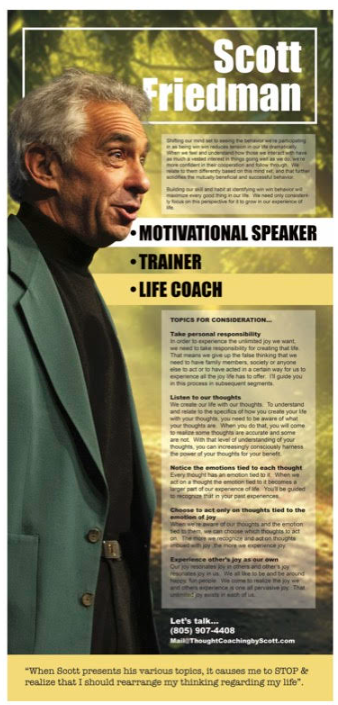
I've been coaching high performers for forty years. The pattern I see most often doesn't look like a crisis from the outside. The work is getting done. The reviews are fine. Nothing has visibly broken. But the person sitting across from me — the executive, the physician, the senior engineer — says some version of the same thing: "I keep waiting to care again. And I do the work. I just don't know where I went." That sentence is worth paying attention to. It's describing something real, and it's not burnout, and it's not solved by a vacation.
This Isn't What You Think It Is
The first thing to understand is that this is not burnout. Not exactly. Clinical burnout has specific markers: physical exhaustion that sleep doesn't fix, a depersonalization from the work and the people in it, and a measurable drop in effectiveness. Doctors screen for it. HR departments have checklists. If your performance were slipping, someone would have noticed by now.
What I'm describing is different. The performance is intact. The habits are intact. The career is, by every external measure, working. But the internal relationship to the work has changed. The thing that used to pull you toward Monday morning is gone. The anticipation before a hard problem — gone. The satisfaction after a good outcome — present for about forty seconds, then gone. What remains is a functional, competent, increasingly hollow professional doing exactly what they're supposed to do.
Gallup's 2025 State of the Global Workplace found that only 21% of employees worldwide were engaged at work. That's a dismal number, but it mostly captures people who were never that engaged to begin with. The more painful phenomenon is the person who was deeply engaged — who built their identity around that engagement — and has watched it quietly evaporate. That person doesn't show up in the disengagement statistics because they're still performing. They're a different category entirely.
I've worked with enough of these people over forty years to recognize them immediately. They usually come to me not because things are bad but because things are fine, and fine has started to feel unbearable. They've been trying to talk themselves out of it — "I have a good job, I should be grateful" — and that narrative has only made it worse, because it adds shame to an already confusing situation.
This is not a motivation problem, in the way most people use that word. It's not solved by a better morning routine or a new goal or a productivity framework. Those interventions assume the engine just needs a tune-up. What's actually happened is more structural than that. The relationship between the person and their work has fundamentally changed, and no amount of optimization addresses that.
The thought coaching lens I use distinguishes between the external situation and the internal experience of that situation. Most of the time, high performers in this state haven't had a dramatic external change. Same job. Same company. Same outcomes. What has changed is the story they're living inside — and that story has become so familiar, so automatic, that it feels like reality rather than interpretation. The first step is always the same: naming what's actually happening, rather than what should be happening given how good everything looks on paper.
How the Spark Actually Leaves (It's Not Sudden)
People want there to be a moment. A specific event they can point to — the promotion that went wrong, the project that killed them, the manager who broke something. Sometimes that event exists. More often, it doesn't. The spark leaves the way a slow leak empties a tire. You don't notice it until you're already flat.
What I see most often is accumulation. A series of small shifts, each individually manageable, that compound over time into something heavier than the sum of its parts. A few of the most common patterns:
The promotion that moved someone away from the work they actually loved and into management they never chose. This happens constantly in technical fields, healthcare, and professional services. You become excellent at the actual work — the engineering, the medicine, the teaching, the craft — and the reward for that excellence is being pulled out of the work and into meetings, reports, and headcount conversations. The skills that made you good at the original thing are largely irrelevant to the new thing. And nobody asks whether you wanted the promotion. It's assumed.
The goal achieved that didn't feel like what you expected. Years of work toward a specific outcome — a title, a number, a recognition — and when you arrive, the feeling lasts about a week. Then it's gone. And the next goal on the list suddenly seems less worth the effort than it did when the previous one was still in front of you. This is not unusual. It's actually predictable. But it's disorienting when it happens to you, because you've always been motivated by the next thing, and now the next thing doesn't move you.
The quiet realization that the organization has changed and you haven't, or vice versa. A company that once felt like a place where good work mattered has shifted into something more political, more bureaucratic, more indifferent to the things you care about. Or you've changed — your values, your priorities, your sense of what's worth your time — and the work you've been doing on autopilot no longer maps to who you actually are.
Self-Determination Theory, developed by Deci and Ryan at the University of Rochester, identifies three core psychological needs that sustain intrinsic motivation: autonomy (a sense of agency over your work), competence (the experience of meaningful growth and mastery), and relatedness (a felt connection to the people and purpose you're working within). When any of these collapses, motivation follows. High performers are especially vulnerable because they invest more in all three — which means there's more to lose, and the drop is steeper.
Harvard Business Review research found that top performers are 59% more likely to leave a job due to lack of growth opportunities compared to average performers. That statistic captures part of the story. The part it doesn't capture is the significant number who don't leave — who stay, and slowly lose the thing that made them excellent.
The Warning Signs Nobody Talks About
The obvious signs come late: missed deadlines, increased absences, visible disengagement. By the time those show up, the process has been underway for months. The early signals are subtler, and they're almost always dismissed by the person experiencing them, because nothing externally seems to justify what they're feeling.
- Clock-watching for the first time in your career. The person who never tracked time starts noticing that it's only 2:30 PM and the day feels endless. They don't understand why. They used to not care what time it was.
- Volunteering less. The person who used to raise their hand for interesting problems stops raising their hand. Not because they're overloaded — they're not. But the interest isn't there to fuel the initiative.
- A low-grade cynicism about things they used to believe in. Mission statements, company values, team culture conversations — these start to produce a faint internal eye-roll rather than genuine investment. They might still say the right things out loud. The private experience has shifted.
- Needing the entire weekend to recover from a normal week. Not from a brutal week. A normal one. The emotional cost of performing competence and caring — when the caring is no longer genuinely there — is significant. The performance takes more out of them than it used to.
- Reading job listings without any real intention to apply. This is rarely about wanting a new job. It's about needing to know the door exists. The listings are a way of checking whether options are still available, not a plan to use them.
- The absence of anticipation before good work. The kind of project that used to generate a particular feeling — an eagerness, a slight acceleration — now arrives without that feeling. The work still gets done. The signal that it mattered isn't there anymore.
- Performing engagement rather than feeling it. Nodding in meetings. Saying the right things. Appearing invested while privately somewhere else entirely. The performance is seamless enough that nobody notices. The person notices.
The Identity Problem Nobody Names
This is the central issue, and it almost never gets named directly. High performers typically build their entire self-concept around their output. Not just their job title or their salary — their identity. The person who brings the most. The person who can be counted on. The person whose contribution is visible and valued. When the spark dims, it doesn't just feel like losing motivation. It feels like losing themselves.
The internal question that goes unnamed — that the person usually can't articulate because it's too uncomfortable to look at directly — is: "If I'm not the person who brings the most, who am I?" That's not a career question. It's an existential one. And it's why standard interventions don't touch it. They address work volume or circumstances. They don't address identity.
From the thought coaching perspective, what's happened is that a particular self-story has become the only story. "I am someone who is excellent at what I do, and my excellence is the thing that makes me valuable, and the thing that makes me valuable is the thing that makes me worthy." That story served them for years. It drove them to work harder, care more, deliver better. It also made them fragile in a specific way: when the excellence stopped feeling meaningful — when the doing got separated from the caring — the whole structure trembled.
The work I do with people in this situation isn't about finding new motivation. It's about loosening the grip of that story enough that they can see it as a story — something they chose, something that served a purpose, something that doesn't have to be the only thing. That process is slower than a productivity system and less dramatic than a career pivot. It's also the only thing I've found that actually works at this level.
What typically happens when this shift occurs is not that the person becomes less excellent. They often become more excellent, because they're no longer doing the work from a place of compulsion and identity-protection. They're doing it from genuine interest. The quality changes. The sustainability changes. The relationship to outcomes changes. They stop needing external validation to confirm they exist, because the internal confirmation is more reliable.
Why Standard Advice Makes It Worse
Take time off. Find a new hobby. See a therapist. Use a better productivity system. Talk to HR. These are the recommendations high performers in this state usually receive, and each of them misses the actual problem in a specific way.
Taking time off removes you from the circumstances temporarily but doesn't change the story you're carrying about the circumstances. When you come back, the story is still there. If anything, coming back and feeling the same as before you left is useful information — it tells you that the problem isn't the workload. Most high performers find this disorienting. It's actually clarifying.
Finding a new hobby assumes the problem is a deficit of non-work engagement. For some people, that's part of it. For most high performers in this specific state, the hobby doesn't touch the core issue. The core issue is about who they are in relation to their work, not about how they spend their evenings. Adding pickleball to a hollow life produces a person who plays pickleball and still feels hollow.
Better productivity systems address the output side of the equation when the problem is on the input side. The issue isn't how the work is being done. It's whether the work means anything anymore. Optimizing a process that has lost its meaning produces a more efficient version of the same emptiness.
Talking to HR works well when the problem is a specific workplace issue — a bad manager, an unclear role, a compensation problem. It doesn't work when the problem is an internal relationship with the meaning of the work. HR is not equipped for that conversation, and it's not their job to be.
What Actually Moves the Needle: The Thought Coaching Approach
The thought coaching framework starts from a specific premise: thoughts are not facts. The high performer is reacting to a story about their situation that has become so familiar it seems like reality. "I've lost my spark" is a thought, not a fact. It's also not a permanent condition. Treating it as a fixed truth is part of what makes it so persistent.
The process I use with people has three stages. Awareness: seeing the thought as a thought, not as objective truth about your situation. This sounds simple. It is genuinely difficult for people who have spent their careers treating their analysis of a situation as accurate information rather than constructed interpretation. The thought "I've lost my spark" is carrying an assumption — that there was something external called a spark, that it left, and that its departure is the defining fact of the current situation. None of that is necessarily true.
Acceptance: stopping the resistance to the current state. Fighting the feeling of emptiness makes it louder. The high performer who is alarmed by their own disengagement — who is performing engagement while feeling empty and judging themselves for the gap — is running two exhausting processes simultaneously. Acceptance isn't resignation. It's stopping the expenditure of energy on trying to not feel what you're feeling, which frees up that energy for something more productive.
Automatic Improvement: when you stop being governed by the thought, space opens up. You start seeing the situation differently without forcing it. This is the part that's hardest to describe because it's not a technique. It's what happens when the first two stages are genuinely engaged. People start noticing things about their work that the story was blocking. The internal shift produces changes in behavior, in engagement, in output — not because they worked harder at performing those things, but because they stopped working so hard at suppressing the experience underneath them.
The timeline is different for everyone. What I can say is that meaningful shifts — moments where the person notices that something is genuinely different — tend to appear faster than people expect once the right thing is being addressed.
Five Practices That Actually Help
Sit with no agenda for 10 minutes. Not meditation as a spiritual discipline. As a practical tool for seeing thoughts more clearly. Most high performers have never done this without a productivity purpose attached. The discomfort they feel in those 10 minutes is exactly the data they need — it's the noise underneath the performance, finally audible.
Redefine what winning means for this chapter specifically. Not the chapter before, not the next one. The motivation that drove a person at 32 is not the same fuel source available at 44. Trying to run on the old fuel is why the engine sputters. What would you be doing right now if "being excellent" wasn't the main metric? That question opens something most people haven't considered since they were young.
Identify one thought you're treating as a fact that might not be. Just one. Not a journaling exercise. A single sentence you've been thinking that you've never questioned. Write it down and ask: is this true, or is it just familiar? Most high performers in this state have a thought running underneath everything — "I should feel more than this," "Something is wrong with me," "This is the best it's going to get" — that they've been accepting as accurate reporting rather than interpreting as a constructed story.
Do one thing today that has a clear, physical completion. Something with a beginning and an end that has nothing to do with performance metrics. Cook a meal from scratch. Build something with your hands. Walk somewhere specific and walk back. This isn't about rest. It's about reminding yourself what it feels like to actually finish something — to have the experience of completion that knowledge work rarely provides cleanly.
Go back to the original pull. Find the moment before the identity got attached to the performance. What was the thing that made you want to be good at this in the first place? Not the result. The activity itself. Most high performers can find it if they look far enough back — a specific problem that felt genuinely interesting, a moment when the work surprised them. That original pull is still in there. The story that's accumulated on top of it has made it hard to feel.
What It Actually Looks Like When the Spark Comes Back
Not triumphant. Honest. The spark doesn't return as fireworks. It returns as a small change in register. A morning where you drive to work and realize you didn't spend the commute dreading it. A meeting where you say something real instead of performing competence. A moment where you care about something at work and the caring feels genuine rather than obligatory.
People often report noticing it in retrospect. They weren't looking for it in the moment — they were just doing something — and afterward they think: that felt different. That's the signal. It doesn't arrive announced. It arrives quietly, in the texture of a specific experience, and it's recognizable because it contrasts with how things have felt for months.
The second thing people notice is that the performance hasn't dropped. They feared it might — that removing the compulsive drive to be excellent would remove the excellence. It almost never does. What it removes is the anxiety that was propping up the performance. The work continues. The internal relationship to it changes. They stop needing it to be the thing that confirms their worth, and it becomes something they do because it's genuinely interesting or genuinely meaningful. That's a more sustainable place to work from than the alternative.
| Dimension | Standard Advice | Thought Coaching Approach |
|---|---|---|
| Root Cause | Overwork, poor work-life balance | A fractured relationship between identity and output |
| Method | Rest, new activities, external change | Identifying and separating thoughts from facts |
| Timeline | Immediate relief, temporary | Slower, but addresses what actually changed |
| What Changes | Circumstances | The internal story about the circumstances |
| Measurement | Feeling better after vacation | Different relationship to the same situation |
| Who It's For | Anyone experiencing stress | High performers whose identity is entangled with performance |
Frequently Asked Questions
Why do I still perform well but feel completely empty inside?
Because performance and motivation operate on different tracks. High performers often run on habit, skill, and professional identity long after the intrinsic motivation has faded. The results look the same from the outside. The internal experience is entirely different. This gap — producing without caring — is one of the most disorienting things a high achiever can face, because nothing in their environment signals that something is wrong.
Is losing motivation a sign I should quit my job?
Not necessarily. In my experience, most high performers who leave in this state carry the problem with them to the next role. The circumstances change but the internal pattern doesn't. Before deciding to leave, it's worth understanding what specifically has shifted — whether it's the work itself, the environment, or a story about both that may not be fully accurate. Sometimes the answer is yes, leave. But often the first step is clarity, not action.
How long does it take to get your passion back after burning out?
There's no honest universal answer. What I can say is that the timeline is shorter when the underlying thought pattern is addressed directly rather than when people wait for circumstances to change. Some people shift meaningfully in a few weeks. Others take longer. The variable isn't time — it's whether the person is willing to look at what's actually going on internally rather than managing around it.
What's the difference between burnout and losing your spark?
Clinical burnout involves physical and emotional exhaustion, depersonalization, and a measurable drop in effectiveness. Losing your spark is different — the effectiveness is often intact. The person still delivers. The absence is internal: the investment, the caring, the anticipation before good work. You can be burned out without having lost your spark, and you can lose your spark without meeting clinical burnout criteria. They can overlap, but they're not the same thing.
Can a life coach actually help with motivation?
Depends on the coach and the approach. What I do isn't about accountability systems or goal-setting structures. It's about identifying the thought patterns that are creating the current experience — and helping the person see those patterns clearly enough that they stop running the show automatically. Motivation is largely downstream of thought. Address the thought layer and motivation often follows without being forced.
Why doesn't taking vacation help when I feel this way?
Because vacation removes you from the circumstances temporarily but doesn't change the story you're carrying about the circumstances. When you come back, the story is still there. If anything, coming back and feeling the same as before you left is useful information — it tells you that the problem isn't the workload. Most high performers find this disorienting. It's actually clarifying.
How do I know if I need coaching or therapy?
Therapy is the right choice when there are unresolved psychological issues that need clinical support — depression, anxiety disorders, trauma. Coaching, specifically thought coaching, is appropriate when the person is fundamentally psychologically healthy but is stuck in a pattern of thinking that's limiting their experience or effectiveness. These aren't mutually exclusive. Some of my clients are also in therapy. The key distinction is: therapy works with what happened; coaching works with what you're thinking now.
Ready to Find Out What's Actually Going On?
First session is free. We talk for 30 minutes. If it doesn't feel useful, you walk away with no obligation and no bill. If it does, we figure out what comes next together. You only pay at the successful conclusion of coaching — and only what you think it was worth.
Book a Free 30-Minute Call