When you feel stuck between two choices, you do not have to find a perfectly certain answer before moving forward. Start by naming the decision clearly, gathering the facts that matter, and noticing what you are telling yourself about each option. Then choose a sensible next step. Sometimes that step is a decision; sometimes it is one conversation or piece of information that makes the decision easier.
A hard choice can carry real consequences. A new job may affect your income and family time. Moving may mean leaving people you love. You can take those realities seriously without demanding that every doubt disappear.
Name the decision you are actually making
Write the choice in one sentence. “Should I change careers?” may be too broad to answer today. “Should I apply for two roles in another field while keeping my current job?” is something you can consider and act on.
Next, write down what each option would mean for your time, finances, relationships, health, and responsibilities. Include a third option if there is one. For example, instead of “quit or stay,” you might explore changing your schedule or looking for work before resigning.
If the choice affects your legal rights, medical care, or significant finances, get appropriate professional guidance. A feeling of clarity is valuable, but it is not a substitute for accurate information.
Remember how you made a good decision before
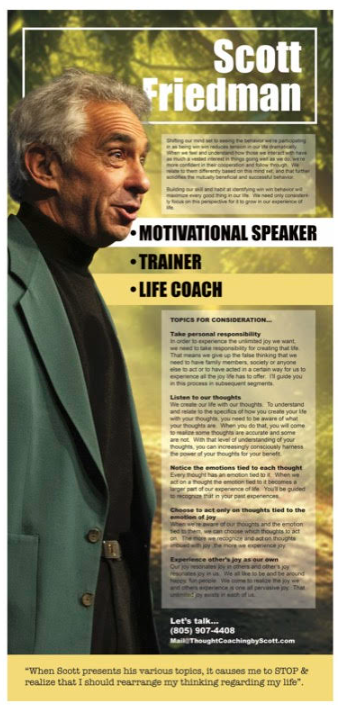
Scott Friedman offers a thoughtful starting point in the published description of his podcast episode “Making Great Decisions.” He encourages listeners to recall decisions they are glad they made, notice how they approached them, and learn from what worked.
Scott shares two personal examples in that description: he remembers feeling peace and joy when deciding to marry his wife, and says his best investment decisions were ones he felt at peace with. These are his experiences, not a rule that calm feelings guarantee a good outcome.
Try thinking of one choice you still feel good about. What information did you gather? Whom did you speak with? Were you patient, or did you act promptly? What mattered most to you? You may discover a decision-making habit worth using again.
Separate the facts from the stories around them
When a decision matters, our minds often supply predictions: “I will disappoint everyone,” “If I try this and fail, I will never recover,” or “There must be one right answer.” Those thoughts deserve to be noticed, but they are not automatically facts.
Scott’s thought-coaching approach invites people to become more aware and accepting of their thoughts so they can choose which ones to act on. In practice, you might write two short columns:
- What I know: the salary, the deadline, the support available, or the likely cost.
- What I am predicting: how someone might react, whether I will regret the choice, or what it might say about me.
Predictions can point to risks worth preparing for. They simply should not be mistaken for certainties. If you notice a harsh thought, you can acknowledge it without arguing with yourself or obeying it.
Choose a small step that gives you useful information
Many difficult choices become easier when you test something rather than trying to imagine every outcome. If you are considering a career change, talk with someone doing the work or take a short class. If you are unsure about a commitment, ask what a trial period could look like.
Not every decision is reversible. For higher-stakes choices, take more time, consult the right people, and plan for realistic downsides. For smaller choices, a modest experiment can help you learn without making a sweeping commitment.
Ask yourself: “What could I do this week that would make this decision a little more informed?” A useful answer may be as simple as scheduling one conversation.
Give yourself permission to decide without perfect certainty
You may still feel nervous after doing your homework. That does not necessarily mean the choice is wrong. Consider setting a reasonable date to review your options, then make the best decision you can with the information available. You can revisit the plan if new facts emerge.
If you are repeatedly revisiting the same fears, Scott’s article on how to respond to overthinking may help. If you are curious about talking through a decision with someone, see what a life-coaching session is like.
Would a conversation help?
Life coaching can offer a place to clarify your priorities, hear your own thinking, and consider next steps. It is different from psychotherapy and does not replace treatment for anxiety, depression, or other mental health concerns. You can learn more about Scott and his approach before deciding whether it fits.
There is no need to arrive with a perfect plan. If you would like to explore a decision with Scott, you are welcome to book a free introductory conversation. You can also simply begin with the one question you are ready to ask yourself today.