After forty years of coaching people who hit rock bottom and built themselves back, I can give you the answer directly, and it begins with a distinction that almost no advice on this subject makes. The rock bottom is real. The loss is real. The pain is real. What is not real, though it feels more real than anything, is the interpretation your mind has produced about what the rock bottom means and what you need to do about it. The standard advice tells you to get back up, to grind, to use the pain as fuel, to hit bottom and bounce. Some of that advice contains a grain of practical truth. But the advice fails for a specific reason. It treats rock bottom as a motivation problem, when rock bottom is actually a thought problem wearing a motivation costume. The feeling that you are destroyed is not produced by the circumstances that brought you down. It is produced by a thought layer that interprets the circumstances as final and as identity-level. Seeing the thought layer as a thought rather than as a perception is what changes the relationship to the rock bottom, and the change in relationship is what allows the rebuilding to begin.
Let me explain what I mean, because the distinction is the entire answer. The research on how people respond to catastrophic loss is solid and surprising. George Bonanno, a professor of clinical psychology at Columbia University, published a paper in 2004 called "Loss, Trauma, and Human Resilience" that changed the field's understanding of what happens after adversity. Bonanno had expected to find that trauma produces pathology in most people, and that recovery is a long process of working through the damage. What he found instead, across studies ranging from the September 11 attacks to the SARS epidemic to people living under chronic stress, is that the most common response to potentially disruptive events is what he called resilience, by which he meant the ability to maintain healthy psychological and physical functioning and the capacity for positive emotions through the event and after it. Not recovery. Not growth. Resilience. The maintenance of equilibrium through the disruption. Bonanno found that this is the most common trajectory, not the exception, and that giving treatment to people who are already resilient can cause the harm the treatment was meant to prevent. The research is descriptively accurate. Most people who experience catastrophic loss do not hit a bottom that requires rebuilding from scratch. They maintain their equilibrium through the loss, and the equilibrium is what allows them to continue. The problem is that the research describes what happens for most people. It does not describe what is producing the experience of the person who has hit the bottom and cannot get back up. And the standard advice, which tells you to grind and use the pain as fuel, treats the rock bottom as a motivation failure, when the rock bottom is actually what is left when a thought layer has been covering the natural capacity for equilibrium that Bonanno's research identified.
The research from the post-traumatic growth side points at the same thing from a different angle. The work of Richard Tedeschi and Lawrence Calhoun, who developed post-traumatic growth theory in the mid-1990s, holds that people who go through psychological struggle following adversity can often see positive growth afterward. Tedeschi and Calhoun were careful to distinguish post-traumatic growth from resilience. Resilience, in their framework, is the ability to bounce back, to maintain equilibrium through the disruption. Post-traumatic growth is different. It refers to what can happen when someone who is not resilient experiences an event that shatters their core beliefs, goes through psychological struggle, and then ultimately finds that the struggle has produced a new understanding of themselves, their relationships, new directions in their lives, their strength, and their relationship to what they call the spiritual dimension. Tedeschi estimates that about one-half to two-thirds of people show some degree of post-traumatic growth. The growth is real. But notice what the theory actually says about the mechanism. The growth is not produced by the rock bottom. The growth is produced by the rebuilding of core beliefs that were shattered, and the rebuilding happens when the old belief system is seen as a belief system rather than as reality. The theory describes what happens. It does not describe the mechanism that produces it. The mechanism is the seeing, and the seeing is what coaching develops.
Why the Standard Advice Fails
The standard advice for hitting rock bottom goes like this. Get back up. Use the pain as fuel. What does not kill you makes you stronger. Hit bottom and bounce. Treat the rock bottom as a gift. Let the loss be your motivation. Grind. The pain is your teacher. The darkest hour is before the dawn.
Some of this advice contains a grain of practical truth, in the sense that action is required to rebuild a life that has fallen apart, and the action requires a degree of determination. But the advice fails for a specific reason. It treats rock bottom as a motivation problem, and it ignores the thought layer that is producing the rock bottom. A person who is told to use the pain as fuel tries to use the pain as fuel, and the pain feels like pain, because the thought layer producing the pain is still running. A person who is told to grind grinds, and the grinding feels like destruction, because the thought layer producing the destruction is still running. A person who is told that what does not kill them makes them stronger waits to feel stronger, and the waiting feels like suffering, because the thought layer producing the suffering is still running. The advice produces a performance of recovery, and the performance is detectable by the person doing it, and the detection is what makes the person feel worse than before they tried.
Here is what I have seen across forty years. A person who is told to treat the rock bottom as a gift treats it as a gift, and the treating feels like a lie, because the thought layer producing the lie is still running. A person who is told to let the loss be their motivation lets the loss be their motivation, and the motivation feels like a performance, because the thought layer producing the performance is still running. A person who is told that the darkest hour is before the dawn waits for the dawn, and the waiting feels like more darkness, because the thought layer producing the darkness is still running. The advice gives the person the behavior without addressing the thought layer producing the effort, and the effort is what makes the behavior feel worse than not doing it.
There is a second reason the advice fails, and it is the one that matters most. The standard advice keeps the person in what I call the rebuilding register. The rebuilding register is the mode of operating where you are monitoring every day for whether you are recovering, evaluating every action for whether it is producing progress, and tracking every feeling for whether it is evidence of growth. The rebuilding register is what produces the stuckness that the recovery advice is trying to resolve. And the rebuilding register is produced by a thought layer that says the rock bottom is permanent, that you are the rock bottom, that everyone else has recovered, and that you do not deserve to recover. The standard advice does not address this thought layer. It gives you behaviors to perform on top of it, and the thought layer continues running underneath the behaviors, and the behaviors feel depleting because the thought layer is still producing the rebuilding register. The person who rebuilds easily is the person who has shifted out of the rebuilding register, and the shift happens not by performing different behaviors but by seeing the thought layer that has been keeping them in the register.
The Real Mechanism
Let me explain what is actually happening, because understanding the mechanism is what makes the shift possible. The capacity to rebuild after rock bottom is the default capacity of a mind that is not being obstructed by a layer of self-referential thought. The mind, when the obstructing layer is thin, naturally settles into a state of equilibrium with what has happened, and the equilibrium is what produces the kind of action that rebuilding requires. This is not something the mind has to do. This is what the mind does when it is not being interfered with. The interference is the thought layer, and the thought layer is not a perception of the circumstances. It is an interpretation of the circumstances that runs fast and below awareness and feels like a perception.
Consider what happens when you watch a person who has the quality you are trying to develop. They have lost everything, and they are not performing recovery. They are simply present with what has happened. They take an action, and the action is not a performance of rebuilding. It is a response to the situation. They feel the grief, and the grief is not a problem to be solved. It is a feeling that moves through them. They make a plan, and the plan is not a test of whether they are recovering. It is a choice about what to do next. The standard analysis says they have good coping skills and a healthy relationship to adversity. But watch more carefully. What you are actually seeing is the absence of something. You are seeing the absence of the self-referential thought layer that produces the finality, the identity, the comparison, and the worth. The person is not adding recovery. They are not performing rebuilding. They are simply present, without the thought layer running that would otherwise be telling them the loss is permanent, that they are the loss, that everyone else has recovered, and that they do not deserve to recover. The presence, without that layer, is what produces the action that rebuilding requires. The quality is not an addition. It is what is left when the subtraction has happened.
There is a reason this matters specifically for the question of rock bottom. Rebuilding is not a quality you can perform. You cannot act recovered. You can only be recovered, and being recovered is what happens when the self-referential thought layer that would otherwise be managing your relationship to the loss is thin enough that what comes through is genuine. The person who is performing recovery is detectable as performing, and the detection is what makes them feel stuck. The person who is simply present with what has happened, without the performance, reads as recovered, and the reading is accurate, because the absence of the performance is what recovery actually is. This is why the standard advice fails. It tells you to perform the qualities that can only exist in the absence of performance.
The Thought Patterns That Produce Rock Bottom
After forty years of coaching people through this, I can tell you that the experience of rock bottom is produced by a small number of thought patterns that run below awareness, and the patterns are more visible in the person experiencing them than in the circumstances they are interpreting. Here are the ones I see most often.
The first is the finality thought. The thought says: this is permanent, or I will never recover, or the life I had is gone and cannot be replaced, or the damage is irreversible. The thought produces a relationship to the loss where the loss feels like a wall rather than a passage, and the wall makes every action feel pointless because the thought layer says the action cannot reach the other side. The finality thought is what makes the grind advice fail, because the person who is told to grind grinds, and the grinding feels like pushing against a wall, because the thought layer producing the wall is still running. When the finality thought is seen as a thought, the wall thins, and the same action, taken without the finality, becomes what it was always capable of being, which is a step rather than a push.
The second is the identity thought. The thought says: I am this, or the rock bottom is who I am now, or I am a person who lost everything, or I am defined by what happened. The thought produces a relationship to yourself where the loss has become your identity, and the identity makes every attempt at rebuilding feel like a performance of someone you are not, because the thought layer says the loss is who you are. The identity thought is the one that feels most true and most defensible, which is what makes it the hardest to see as a thought. The loss is real. But the thought that says the loss is who you are is not the loss. It is an interpretation that replaces the person with the event, and the replacement is what makes the rebuilding feel like impersonation rather than recovery. When the identity thought is seen as a thought, the impersonation drops, and what comes through is the person who existed before the loss and continues to exist through it, and the person is what rebuilding actually grows from.
The third is the comparison thought. The thought says: everyone else has recovered, or I am the only one still down, or I should be further along by now, or other people lost less and recovered faster. The thought produces a relationship to your own recovery where you are always measuring it against an imagined timeline and finding it inadequate, and the measurement makes the recovery feel like a failure rather than a process. The comparison thought is what makes the standard advice fail, because the person who is told to get back up gets back up, and immediately compares their progress to the progress of the people who seem to have recovered faster, and the comparison is what makes the getting back up feel worse than staying down. When the comparison thought is seen as a thought, the measurement drops, and the same process, experienced without the comparison, becomes what it was always capable of being, which is a gradual unfolding rather than a test.
The fourth is the worth thought. The thought says: I do not deserve to recover, or I brought this on myself, or I am being punished, or I had it coming, or the loss is what I am worth. The thought produces a relationship to the possibility of recovery where the possibility feels foreclosed by your own inadequacy, and the foreclosure makes the effort feel undeserved. The worth thought is the hardest to see of the four, and it is the one that connects most directly to the standard advice, because the standard advice says you need to earn your recovery through grinding, and the worth thought says you cannot earn what you do not deserve. When the worth thought is seen as a thought, the foreclosure opens, and the effort that follows is conducted from the understanding that recovery is not earned but uncovered, and the uncovering is what allows the rebuilding to proceed without the self-punishment that was making it impossible.
What Actually Works
The standard advice tells you to get back up, use the pain as fuel, and treat the rock bottom as a gift. The direct answer is that you do not produce recovery by performing it. You stop obscuring it. The capacity to rebuild after rock bottom is the default capacity of a mind in which the obstructing thought layer has thinned, and the thinning happens by seeing the thought layer as a thought rather than as a perception. This is the work, and it is the work whether the loss is recent or old, because the thought layer runs the same way in every case and the capacity is the same in every person.
Here is what I tell the people I coach. Start by noticing the thought layer in yourself, because the thought layer is the one thing you can see directly, and it is the one thing producing the rock bottom. When you feel the finality, notice the thought that says the loss is permanent. When you feel the identity, notice the thought that says the loss is who you are. When you feel the comparison, notice the thought that says everyone else has recovered. When you feel the worth, notice the thought that says you do not deserve to recover. The thought is not a perception. It is an interpretation. And an interpretation that is seen as an interpretation stops producing the behavior that was covering the recovery the situation requires.
Then notice what happens when the thought is seen. The finality thought, seen as a thought, stops producing the wall. The identity thought, seen as a thought, allows the person to come through. The comparison thought, seen as a thought, stops producing the measurement. The worth thought, seen as a thought, allows the effort to be conducted from the understanding that recovery is not earned. This is not a technique. It is a seeing. And the seeing is what coaching develops, because the seeing is the one capacity that the standard advice does not teach.
The practical tools still matter. Taking action is useful. Making a plan is useful. Asking for help is useful. Building a daily structure is useful. But the tools work when the thought layer is thin, and the tools fail when the thought layer is thick, and the thickness or thinness is not produced by the tools. It is produced by the seeing, and the seeing is what coaching develops. The person who has addressed the thought layer can take the same action that felt like grinding and have it feel like a step. The person who has not addressed the thought layer will take the same action and have it feel like grinding, because the thought layer producing the grinding is still running underneath the action.
The research confirms this without naming it. The Bonanno research found that the most common response to catastrophic loss is resilience, and that resilience is the maintenance of equilibrium through the disruption, not the production of a new state. The Tedeschi and Calhoun research found that post-traumatic growth is produced by the rebuilding of core beliefs, and the rebuilding happens when the old belief system is seen as a belief system rather than as reality. Both findings describe the same mechanism from different angles. The recovery is not an addition. It is a subtraction, and the subtraction is done by seeing the thought layer that has been covering the capacity that was always there.
The Rock Bottom Paradox
There is a paradox at the center of this question that is worth naming directly, because it is the paradox that makes the standard advice fail in a way that is hard to see. The paradox is this. You do not build yourself back by building. You build yourself back by seeing the thought that was telling you you were destroyed. The rebuilding is not an addition. It is what is left when the destruction thought is seen as a thought. The person who is trying to build themselves back while running the finality thought is trying to build on a foundation that the thought is telling them is gone, and the thought is what makes the building feel impossible. The paradox resolves when the finality thought is seen as a thought, because the seeing is what allows the foundation to be felt as present, and the foundation is what was always there, under the thought that was saying it was gone.
This is not a motivational point. It is a mechanical one. Rebuilding after rock bottom is produced by a mind that has seen the thought layer that was producing the rock bottom, and the seeing is what allows the natural capacity for equilibrium to return. The performance of recovery, running on top of the thought layer, produces a managed rebuilding, and the managed rebuilding is what makes the recovery feel stuck, because recovery requires the absence of management. The standard advice, which tells you to perform recovery, produces the opposite of what it intends, because performed recovery is not recovery. It is a performance of recovery, and the performance is what makes the rebuilding feel managed, and the management is what prevents the equilibrium. The direct answer is that you build yourself back by being the absence of the thought that was covering the capacity that was always there, and the absence is produced by seeing the destruction thought as a thought.
What This Means for You
If you are someone who has hit rock bottom and has been trying to build yourself back, and the rebuilding has not taken hold, the standard analysis says you have a motivation problem. The direct answer is that you have a thought problem, and the thought problem is running in you, and the stuckness is the visible output of the invisible pattern. The people who rebuild after rock bottom are not all grinding harder than you. They are running a thinner thought layer, and the thinness is what allows the action to feel like a step rather than a push.
The people I coach across Ventura County and the rest of the country are dealing with this every day. In the corporate and business communities around Thousand Oaks and Westlake Village, the identity thought is dominant. People who built their identity around a career or a business arrive at a point where the career or the business has collapsed, and the collapse has become their identity, and the identity is what makes every attempt at rebuilding feel like impersonation. In the healthcare and helping-profession communities around Ventura and Oxnard, the worth thought is common. People who spent their lives caring for others arrive at a point where their own loss feels undeserved of care, and the undeserving is what makes the asking for help feel impossible. In the agricultural and working-class communities of Santa Paula and Fillmore, the finality thought runs. People who have lost a livelihood or a family structure arrive at a layer where the loss feels permanent, and the permanence is what makes every action feel pointless.
If you want to look into this, learn more about life coaching or book a free discovery call. You pay nothing upfront. At the successful conclusion of coaching, you pay what you think it was worth. That model exists because I am confident the work works, and I would rather you find out for yourself than take my word for it.
Frequently Asked Questions
How do you build yourself back after hitting rock bottom?
The standard advice says to get back up, grind, and use the pain as fuel. The direct answer is that rock bottom is not a motivation problem. It is a thought problem. The stuckness is produced by a thought layer that interprets the loss as permanent, as identity-level, as a comparison you are failing, and as something you do not deserve to recover from. Four thought patterns produce rock bottom: finality, identity, comparison, and worth. Seeing the thoughts as thoughts is what thins the layer and allows the natural capacity for rebuilding to return.
Why does the standard advice about rock bottom fail?
Because the advice treats rock bottom as a motivation problem and gives you behaviors to perform on top of the thought layer that is producing the rock bottom. The person who is told to grind grinds, and the grinding feels like pushing against a wall, because the thought layer producing the wall is still running. The advice produces a performance of recovery, and the performance is what makes the person feel stuck. The recovery is not produced by performing it. It is produced by the absence of the thought layer that has been covering it.
What does the research say about resilience after trauma?
George Bonanno, a professor of clinical psychology at Columbia University, found in a 2004 paper that the most common response to potentially disruptive events is resilience, which he defined as the ability to maintain healthy psychological and physical functioning and the capacity for positive emotions through the event. The research found that resilience is the most common trajectory, not the exception, and that giving treatment to people who are already resilient can cause harm. The finding is that most people who experience catastrophic loss do not hit a bottom that requires rebuilding from scratch.
What is post-traumatic growth and how is it different from resilience?
Post-traumatic growth is a theory developed by Richard Tedeschi and Lawrence Calhoun in the mid-1990s. It holds that people who go through psychological struggle following adversity can often see positive growth afterward. Tedeschi and Calhoun were careful to distinguish it from resilience. Resilience is the ability to bounce back and maintain equilibrium. Post-traumatic growth is what happens when someone who is not resilient experiences an event that shatters their core beliefs, goes through psychological struggle, and then finds that the struggle has produced a new understanding of themselves, their relationships, new directions in their lives, their strength, and their relationship to what they call the spiritual dimension. Tedeschi estimates that about one-half to two-thirds of people show some degree of post-traumatic growth.
Do you have to hit rock bottom to change?
No. The concept of rock bottom as a prerequisite for change is not backed by the research. Bonanno's work found that most people maintain equilibrium through adversity without hitting a bottom. The concept of rock bottom comes from addiction recovery literature, but the research on addiction has found that the idea of forcing people to hit bottom is not just unbacked, it is harmful. The key to change is not the rock bottom. The key is seeing the thought layer that is producing the stuckness, and that can happen at any point, not just at the bottom.
How long does it take to rebuild after rock bottom?
The Tedeschi and Calhoun research found that post-traumatic growth takes time, effort, and struggle. It is not a quick process. But the timeline is not produced by the circumstances. It is produced by the thickness of the thought layer that is covering the capacity for rebuilding. A person with a thick thought layer can spend years grinding and feel stuck. A person who has seen the thought layer can find that the rebuilding begins quickly, because the capacity was always there and the seeing is what removes the obstruction. The timeline is not a function of the loss. It is a function of the seeing.
What if I feel like I do not deserve to recover?
The thought that says you do not deserve to recover is the worth thought, and the worth thought is one of the four thought patterns that produce rock bottom. The thought is not a perception. It is an interpretation, and the interpretation produces a foreclosure that makes the effort feel undeserved. The worth thought is the hardest to see of the four, and it is the one that connects most directly to the standard advice, because the standard advice says you need to earn your recovery, and the worth thought says you cannot earn what you do not deserve. Seeing the worth thought as a thought is what allows the effort to be conducted from the understanding that recovery is not earned but uncovered.
How much does life coaching cost?
You pay nothing upfront. At the successful conclusion of coaching, you pay what you think the work was worth and what you can afford. There is no set fee. The first discovery call is free and there is no obligation to continue. This model is not a marketing tactic. It is how I have practiced for forty years.
Ready to See What Is Actually Covering Your Capacity to Rebuild?
If you have been trying to build yourself back after rock bottom by performing the behaviors of recovery, and the rebuilding has not taken hold, the reason is not that you have not found the right motivation or the right grinding technique. The reason is that the rebuilding is not produced by performing it. It is produced by subtraction, and the subtraction is done by seeing the thought layer that has been covering it, not by adding more behaviors on top of it. That thought layer can be seen. And a thought that is seen is a thought that stops covering the capacity for rebuilding from below awareness.
If you are ready to stop performing your way into recovery and start seeing what is actually covering your capacity to rebuild, book a free discovery call. We will look at the thought together. You will see, probably for the first time, that the rebuilding you have been chasing was never going to be reached by finding the right motivation. It was going to be uncovered by seeing the thought that was telling you the loss was permanent, that the loss was who you are, that everyone else had recovered, and that you did not deserve to. Seeing it is the work. The work is what changes everything.
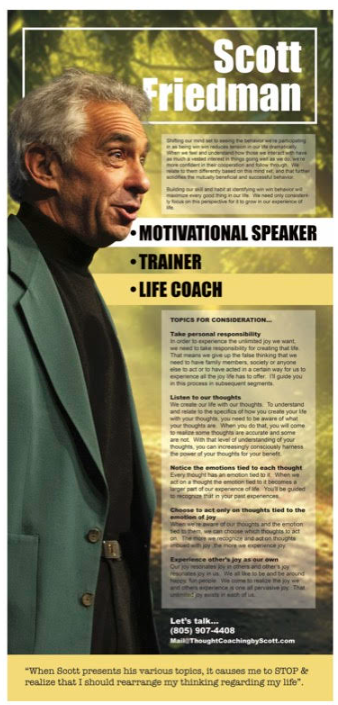
Scott Friedman has maintained a daily meditation practice for over 40 years and has authored 14 books on thought coaching and conscious living. His life coaching model is unique: you pay nothing upfront. At the successful conclusion of coaching, you pay what you think it was worth. Learn more about Scott or book a free call.