You do not need to eliminate self-doubt before moving forward. You can notice a doubtful thought, consider whether it contains useful information, and still choose a small, sensible action. Confidence often develops through experience rather than arriving beforehand.
If you are questioning yourself before a conversation, career decision, or new responsibility, stop treating doubt as a verdict. Doubt is an experience you are having, not a complete description of who you are.
Notice the thought without arguing with it
Suppose you are preparing to speak at a meeting and think, “I am going to embarrass myself.” You might try to replace the thought with a positive one. But forced reassurance can become another exhausting argument in your mind.
Instead, acknowledge what is present: “I am having the thought that I might embarrass myself.” That change in wording creates a little distance. You can then ask whether preparation, practice, or a conversation with someone you trust would help.
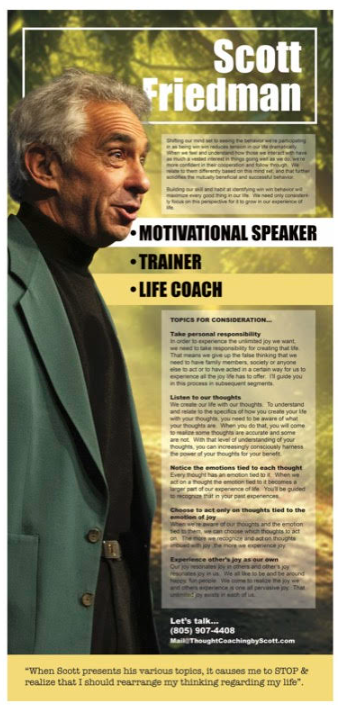
Scott Friedman describes a related approach in his podcast Reducing doubt. In his published first-person episode description, Scott says trying to deny or eliminate doubt is unhelpful. His perspective is to accept that doubtful thoughts arise while remembering that we can choose whether to act on them. This is his coaching philosophy, not a clinical treatment.
Remember what you have already learned
Self-doubt can make the present challenge feel like the first difficult thing you have ever faced. Yet you may already have examples of learning something unfamiliar, asking for help, repairing a mistake, or persevering through uncertainty.
Think of one specific accomplishment. It does not have to impress anyone else. Perhaps you learned a complicated task at work or made a difficult phone call. Ask: What did I actually do? Did I prepare? Did I keep trying? Who helped me?
Scott's episode description encourages listeners to remember past accomplishments achieved despite doubt. The point is not to pretend every past attempt succeeded. It is to recognize the abilities and support that helped you respond to challenges.
Choose one action that fits the situation
There is no need to make a dramatic leap. If you doubt your ability to apply for a new role, review the requirements and identify one skill to strengthen. If you are nervous about speaking up, prepare one question. If you are uncertain about a relationship conversation, write down what you hope to communicate.
Keep the action realistic. Some doubts point toward genuine risks or missing information, and those deserve attention. Acceptance is not ignoring consequences. You can listen to a concern without letting the most frightening prediction make every decision.
What if it goes badly?
A disappointing result can hurt. Give yourself permission to feel that disappointment. When ready, separate the event from the larger story about yourself. “That conversation did not go as I hoped” is different from “I am incapable of communicating.”
Consider what you would adjust next time, whether the goal still matters, and whether you need support. You may try again, change course, or pause. All three can be thoughtful choices.
When coaching may help
A life coach can offer space to explore how you relate to thoughts and what you want to do next. Read about what happens during a coaching session and choosing a coach. Scott's approach centers on thought awareness, acceptance, and conscious choice. Learn more about Scott.
If doubt accompanies persistent anxiety, depression, trauma symptoms, or significant impairment, a licensed mental health professional may be more appropriate. Coaching does not replace therapy. If you would like to explore whether coaching fits, Scott offers an optional free introductory conversation.